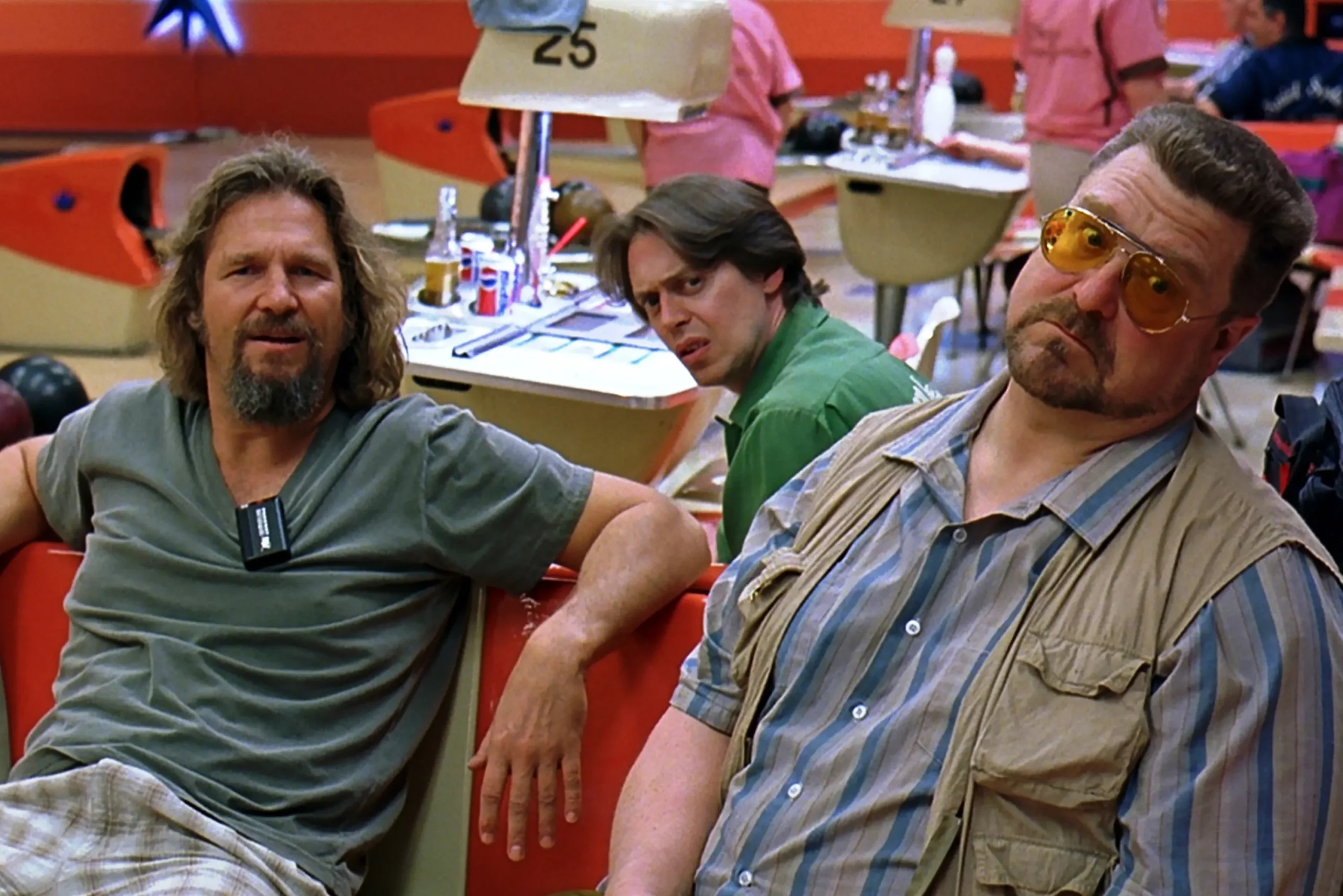
I have a theory that has irritated almost every film lover I’ve shared it with. It sounds ridiculous at first, almost conspiratorial. But the more Academy Awards I revisit, the harder it becomes for me to dismiss it. I have come to believe that the Oscars don’t simply reward the best film—they reward the Best Interpretation of the American Dream for that particular moment in history.
My theory is this: the Oscars rarely choose the “best” film. They choose the film that best reinterprets James Truslow Adams’ idea of the American Dream for its generation.
That sentence is important because I am not talking about the popular definition of the American Dream—a mansion, a luxury car, and a six-figure salary. Adams never meant that. In The Epic of America (1931), the book that coined the phrase “American Dream,” he described it as “a dream of a land in which life should be better and richer and fuller for everyone, with opportunity for each according to ability or achievement.” He even warned that it was not merely about “motor cars and high wages.” It was fundamentally a moral and social aspiration rather than a financial one—the very standard by which I believe the Academy unconsciously rewards the Best Interpretation of the American Dream.
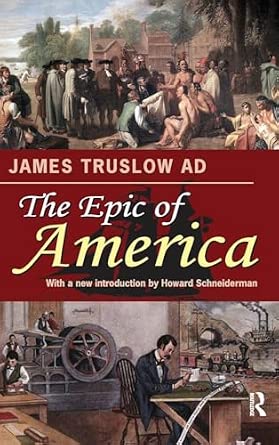
The Epic of America
Published in 1931, James Truslow Adams’ The Epic of America introduced the phrase “American Dream”, defining it as far more than wealth or material success. If you’re interested in the ideas behind this article, this classic book is the perfect place to begin.
📖 Read the Book NowNow here’s where my theory begins. The Academy rewards the Best Interpretation of the American Dream.
If the Academy is, consciously or unconsciously, America’s cinematic mirror, then every Best Picture winner is less a judgment of filmmaking craft than a declaration of what America wanted to believe about itself at that particular historical moment. The winning film becomes a cultural update to Adams’ original thesis. It tells audiences what the Best Interpretation of the American Dream currently looks like—or what Americans desperately wish it looked like.
Take 1994. Most people remember that year because Forrest Gump, Pulp Fiction, and The Shawshank Redemption competed together. Film students still argue that Pulp Fiction changed cinema more profoundly than Forrest Gump. Many believe Shawshank has aged better than both. Yet the Academy chose Forrest Gump. Why?
Because Forrest accidentally embodies Adams’ dream more perfectly than almost any modern protagonist. He simply keeps moving with honesty, persistence, humility, and kindness while history rearranges itself around him. Every institution that defines twentieth-century America—war, business, sports, politics, family, disability—is filtered through a character who succeeds without cynicism. That’s almost a cinematic translation of Adams’ vision that one’s birth should not determine one’s fullest potential. The Academy wasn’t merely rewarding Robert Zemeckis. It was rewarding an idealized version of America itself.
The same pattern appears again and again. Titanic (1997) isn’t remembered simply because a ship sinks. Jack Dawson represents limitless possibility. He owns almost nothing, yet possesses imagination, artistic talent, optimism, and emotional freedom. Rose rejects inherited wealth to choose authenticity over aristocracy. The film quietly argues that class can be escaped—not through violence or revenge—but through courage and self-definition. That’s another version of the American Dream, wrapped inside a romance.
Then comes American Beauty (1999), perhaps the Academy’s most misunderstood winner. Critics often describe it as a satire of suburbia, but I think it performs a far more radical function. On the surface, the film follows Lester Burnham, a middle-aged advertising executive trapped in a lifeless marriage, disconnected from his daughter, and numbed by the routines of suburban success.
Surrounded by manicured lawns, expensive homes, luxury cars, and the illusion of the perfect family, Lester appears to have achieved everything the post-war American Dream promised. Yet he feels completely empty. As he begins rebelling against the life he has carefully built—quitting his corporate job, buying the sports car he always wanted, and rediscovering a sense of freedom—the film gradually reveals that none of these material pursuits can restore genuine happiness. Meanwhile, every member of the neighborhood hides a carefully constructed façade, exposing the quiet desperation beneath suburban perfection.
That’s why I believe American Beauty offers one of the Best Interpretations of the American Dream ever rewarded by the Academy. Sam Mendes isn’t celebrating prosperity; he’s questioning whether America confused prosperity with meaning. Adams himself warned against reducing the dream to material possessions, insisting that it was about creating a life that was “better and richer and fuller” for everyone rather than simply accumulating wealth. Ironically, American Beauty may be closer to Adams’ original definition than many overtly patriotic films. Instead of asking how to achieve the American Dream, it asks whether Americans have been chasing the wrong dream all along.
Then something fascinating happens after September 11. The Academy’s winners become increasingly obsessed with moral responsibility rather than personal success. A Beautiful Mind celebrates intellectual perseverance. Million Dollar Baby questions sacrifice. Crash insists that ordinary people remain trapped inside invisible social divisions. No Country for Old Men almost suggests that the Dream itself has become unrecognizable. America stops asking, “How do I succeed?” and begins asking, “What kind of country have we become?”
This is why I never believed The Lord of the Rings: The Return of the King won solely because it completed a trilogy. It certainly rewarded Peter Jackson’s achievement, but culturally it also represented collective perseverance. A fellowship made of ordinary individuals defeats impossible odds not because one hero is superior but because each contributes something unique. Opportunity through individual ability working toward a common purpose—that sounds remarkably Adamsian.
Then comes Slumdog Millionaire (2008), which, despite being set largely in India, fascinated American audiences because it translated the best interpretation of the American Dream into a global language. A poor boy rises not through inherited privilege but because every painful experience in his life eventually gains meaning. Ironically, one of the Academy’s most “international” winners may actually reaffirm America’s favorite myth: life rewards perseverance, however unlikely the odds.
The King’s Speech (2010) shifts the Dream again. Achievement is no longer measured by wealth but by overcoming personal limitations. Likewise, The Artist (2011) romanticizes reinvention itself—a deeply American concept despite being a French production.
When 12 Years a Slave won in 2013, I think the Academy performed something even more significant. It acknowledged that the American Dream cannot remain credible without confronting the people historically excluded from it. Adams imagined universal opportunity, but American history often denied precisely that.
The Academy, whether intentionally or not, expanded the Dream by exposing its contradictions. Historians have long noted that Adams’ optimistic framework overlooked the systematic exclusion of many Americans from equal opportunity.
Then look at Moonlight. What exactly did it win for? It isn’t about economic mobility at all. Instead, it argues that dignity, identity, and self-acceptance are themselves forms of freedom. Suddenly the Best Interpretation of the American Dream isn’t external achievement but internal liberation.
Many people still insist La La Land should have defeated Moonlight. I disagree. If my theory holds, the Academy chose the film that redefined success rather than the one that celebrated ambition. La La Land still believes achievement validates sacrifice. Moonlight argues that simply becoming yourself may be the greater victory. That feels like a more contemporary interpretation of Adams than a nostalgic musical.
Parasite complicates my theory beautifully because it isn’t American. Yet perhaps that is exactly why it won. On the surface, Bong Joon-ho tells the story of the impoverished Kim family, who gradually infiltrate the wealthy Park household by posing as unrelated, highly qualified employees. What begins as a clever social satire slowly transforms into a tense thriller, exposing the invisible barriers between the rich and the poor until the illusion of upward mobility collapses into violence.
Beneath its intricate plot lies a devastating critique of modern capitalism: the poor can imitate success, work relentlessly, and even occupy the same physical spaces as the wealthy, yet the social hierarchy remains fundamentally unchanged. By awarding Parasite Best Picture, the Academy wasn’t rejecting James Truslow Adams’ vision of the American Dream—it was confronting the uncomfortable possibility that the Dream itself had become structurally unattainable.
In honoring a Korean film that questions whether merit and hard work are still enough to transcend class, the Oscars seemed to ask a deeper question of America: Does the nation still live up to the promise Adams imagined in The Epic of America?
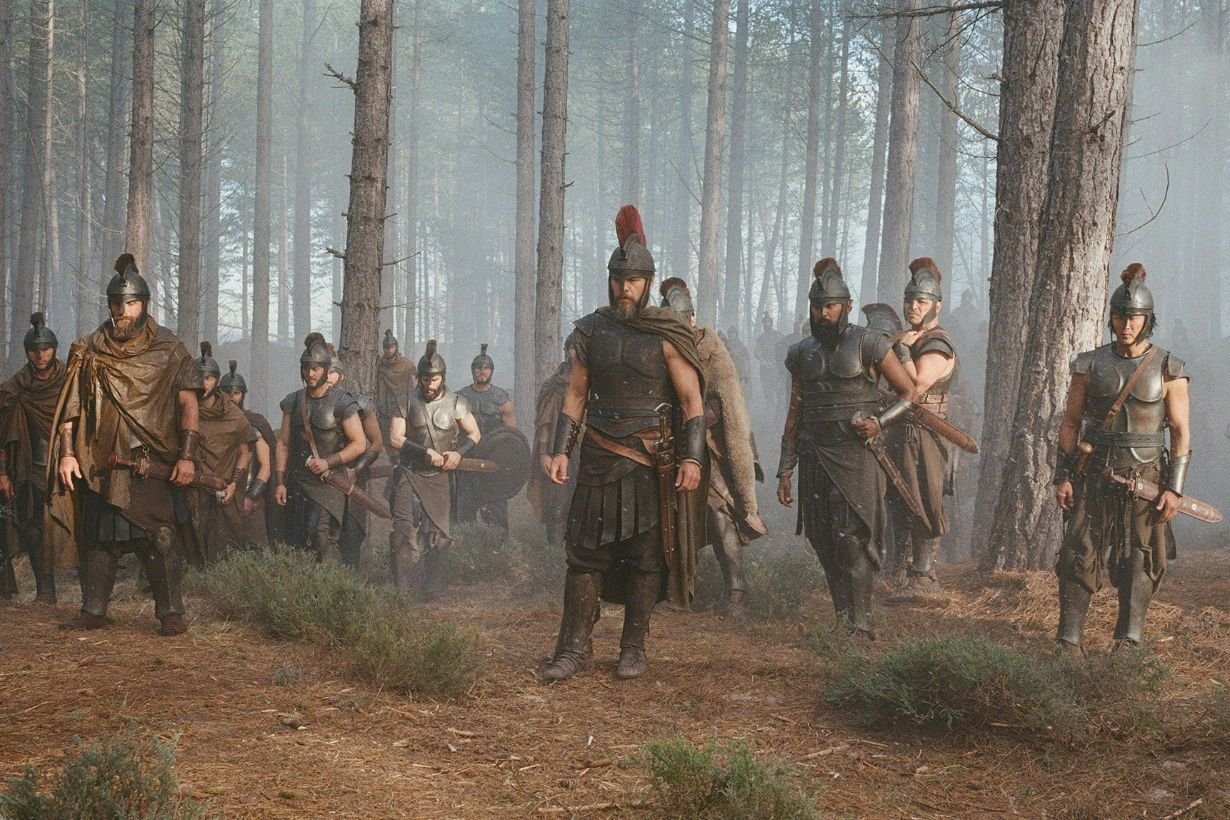
Nomadland strips away nearly every conventional symbol of success. Home ownership disappears. Stable employment disappears. Retirement disappears. Yet dignity remains. Freedom remains. Human connection remains. The Dream is reduced to its philosophical minimum.
Everything Everywhere All at Once may be the clearest twenty-first-century update to Adams’ idea. Evelyn doesn’t become extraordinary because she conquers the multiverse. She succeeds because she chooses empathy over infinite possibility. The Dream becomes emotional reconciliation rather than economic triumph.
Even recent winners continue the pattern. Oppenheimer is often discussed as a biographical epic, but beneath Christopher Nolan’s sweeping narrative lies another reinterpretation of the American Dream. The film follows physicist J. Robert Oppenheimer from his early academic years through his leadership of the Manhattan Project, where his brilliance helps create the atomic bomb during World War II. What begins as the story of an extraordinary scientific achievement gradually transforms into the story of a man haunted by the consequences of his own success. As Oppenheimer rises to the pinnacle of American innovation, he simultaneously becomes a prisoner of the moral burden that accompanies it, facing political persecution, public scrutiny, and an irreversible sense of guilt.
That is why I think Oppenheimer represents the Best Interpretation of the American Dream for a modern audience. It asks a question earlier Oscar winners rarely confronted: Can achievement still be celebrated when its consequences reshape humanity itself? Greatness, the film suggests, is no longer measured solely by accomplishment but by the responsibility that follows it. Meanwhile, films recognized by the Academy throughout the mid-2020s increasingly emphasize identity, justice, memory, immigration, community, and historical accountability over traditional symbols of wealth and status. The American Dream has evolved once again. Its survival now depends less on prosperity than on whether America can remain morally recognizable in the face of its own achievements.
Of course, this theory has obvious weaknesses. Brilliant winners exist that don’t fit perfectly. Outstanding losers also fit the pattern. Correlation isn’t causation. Oscar campaigns, politics, industry relationships, and voting blocs all influence outcomes. Cinema is far too complicated to be explained by a single framework. Perhaps my theory will eventually be disproved, and I’m perfectly comfortable with that.
But I keep returning to one stubborn observation. “How do you define the best interpretation of the American Dream?”
When I stop asking, “Which film was technically superior?” and instead ask, “Which film most convincingly redefined the American Dream for its era?” the Academy’s decisions begin to make unsettling sense. The debates never completely disappear, but they begin to feel less random and more like reflections of the cultural moment in which each winner emerged.
Perhaps that has always been the Oscars’ hidden purpose. Maybe Best Picture has never been about crowning the greatest film. Maybe it has always been about selecting America’s favorite story about itself—the best interpretation of the American Dream for its time. That would also explain why audiences continue arguing decades later. After all, nostalgia makes movies better for many viewers, allowing certain films to grow in stature long after Oscar night has ended.
The same pattern appears in other cinematic debates. We constantly question whether historical accuracy in films should matter more than emotional truth, or why some overlooked movies gradually become beloved decades later. Those questions seem unrelated on the surface, yet they all point toward the same mystery: why do certain stories endure while others fade? Perhaps the answer lies in how each generation defines the Best Interpretation of the American Dream, whether through authenticity, memory, or reinvention.
Conceivably, that’s exactly what lies at the heart of the making of a cult classic. Awards may recognize a film at a specific moment in history, but audiences ultimately decide which stories survive across generations. The Oscars can celebrate a film’s place in its own time, while viewers determine its place in cinematic history.
And if my theory is even partially true, that the Academy rewards the Best Interpretation of the American Dream, then somewhere inside every Oscar-winning film lies a conversation that James Truslow Adams unknowingly started in 1931—a conversation that Hollywood has been rewriting, one generation at a time.