A few days ago, my professor asked a question that seemed simple at first: Does historical accuracy in films really matter?
I gave the obvious answer. Of course it does. History deserves to be respected. Films should not change facts simply because it makes a better story. So yes, historical accuracy in films really do matter.
But the question stayed with me long after the class ended.
The more I thought about it, the more I realized that I wasn’t really answering the question. I was defending history, not cinema. Those are not always the same thing.
As someone who loves films, I spend far too much time thinking about why certain stories remain with us. It is rarely because every event happened exactly as it is shown on screen. The films I remember most are the ones that made me feel something I had not felt before. They changed the way I looked at people, ideas, or even myself. That is an emotional truth, and it is very different from historical truth.
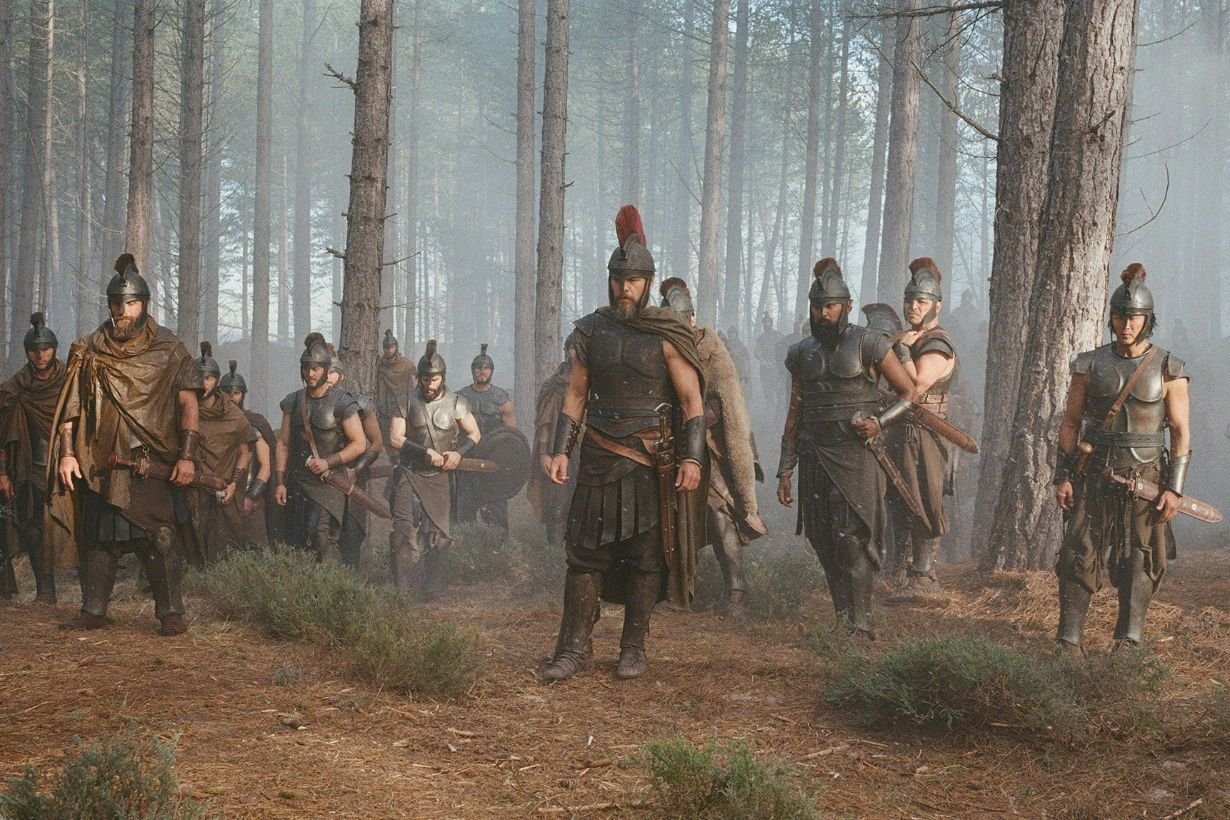
Christopher Nolan’s The Odyssey brought this question back to me. Before watching it, I already knew people would compare every scene with Homer’s epic. They would ask whether Odysseus was too noble, whether certain characters had been changed too much, or whether the film respected the original text. Those are fair questions. Adaptations invite comparison.
Yet, while watching the film, I found myself asking different questions. Why did Nolan choose to soften some parts of Odysseus? Why did he focus so much on the collapse of civilizations instead of only the hero’s journey? What did these choices reveal about the world we live in today? Suddenly, accuracy no longer seemed like the only conversation worth having.
Perhaps this is what great adaptations are meant to do. They are not museums that preserve stories behind glass. They are conversations between the past and the present. Every generation inherits old stories, but it also reshapes them according to its own fears, hopes, and questions. If artists were expected to reproduce every detail without interpretation, we would never have new perspectives on old ideas.
This does not mean that historical accuracy is unimportant. It matters because history belongs to all of us. Films should not encourage ignorance or deliberately replace established knowledge with convenient fiction. There is a responsibility that comes with adapting real events or influential texts. But responsibility should not become a cage. Cinema loses something when creativity is reduced to simple imitation.
I have also begun to think that perhaps we sometimes ask too much of films. We expect them to entertain us, educate us, preserve history, satisfy scholars, and remain faithful to every source. Few works of art can carry all those expectations at once. Maybe the better approach is to understand what a film is trying to achieve before deciding whether it succeeds.
What I admire about cinema is not its ability to recreate the past perfectly. It is its ability to make the past feel alive again. A two-thousand-year-old poem can still provoke debate because a filmmaker looked at it differently. Whether we agree with that interpretation is almost secondary. The conversation itself keeps the story alive.
My professor never really answered the question in class. Perhaps there was never supposed to be a single answer.
After thinking about it for days, mine has changed.
Historical accuracy in films matters because it gives us a foundation. Artistic freedom matters because it allows us to keep building on that foundation. Without history, films risk becoming empty inventions. Without interpretation, history risks becoming silent.
As a cinephile, I think I need both.